Power Query is a powerful data connection and transformation engine built natively into Microsoft Excel and Power BI. It provides an intuitive, graphical user interface that allows users to connect to data sources, clean messy information, reshape tables, and load the results into data models without writing complex code from scratch. Under the hood, every action records an immutable sequence of steps using the functional M formula language, ensuring that data preparation is completely repeatable and automated.
Key Strengths of Power Query
Automation & Reusability: Once a data transformation routine is built, it can be refreshed instantly with a single click or scheduled automated refresh, eliminating manual, error-prone data wrangling.
No-Code / Low-Code Accessibility: The visual editor handles 90% of common data shaping tasks—such as filtering rows, removing duplicates, changing data types, and splitting columns—while allowing advanced users to edit the underlying M code directly.
Robust Integration: It acts as the foundational ETL (Extract, Transform, Load) layer across the entire Microsoft ecosystem, sharing identical transformation logic between Excel spreadsheets and enterprise Power BI datasets.
Real-World Enterprise Applications at NJR
Power Query serves as the backbone for critical data operations, automating complex workflows across marketing, operations, and accounting:
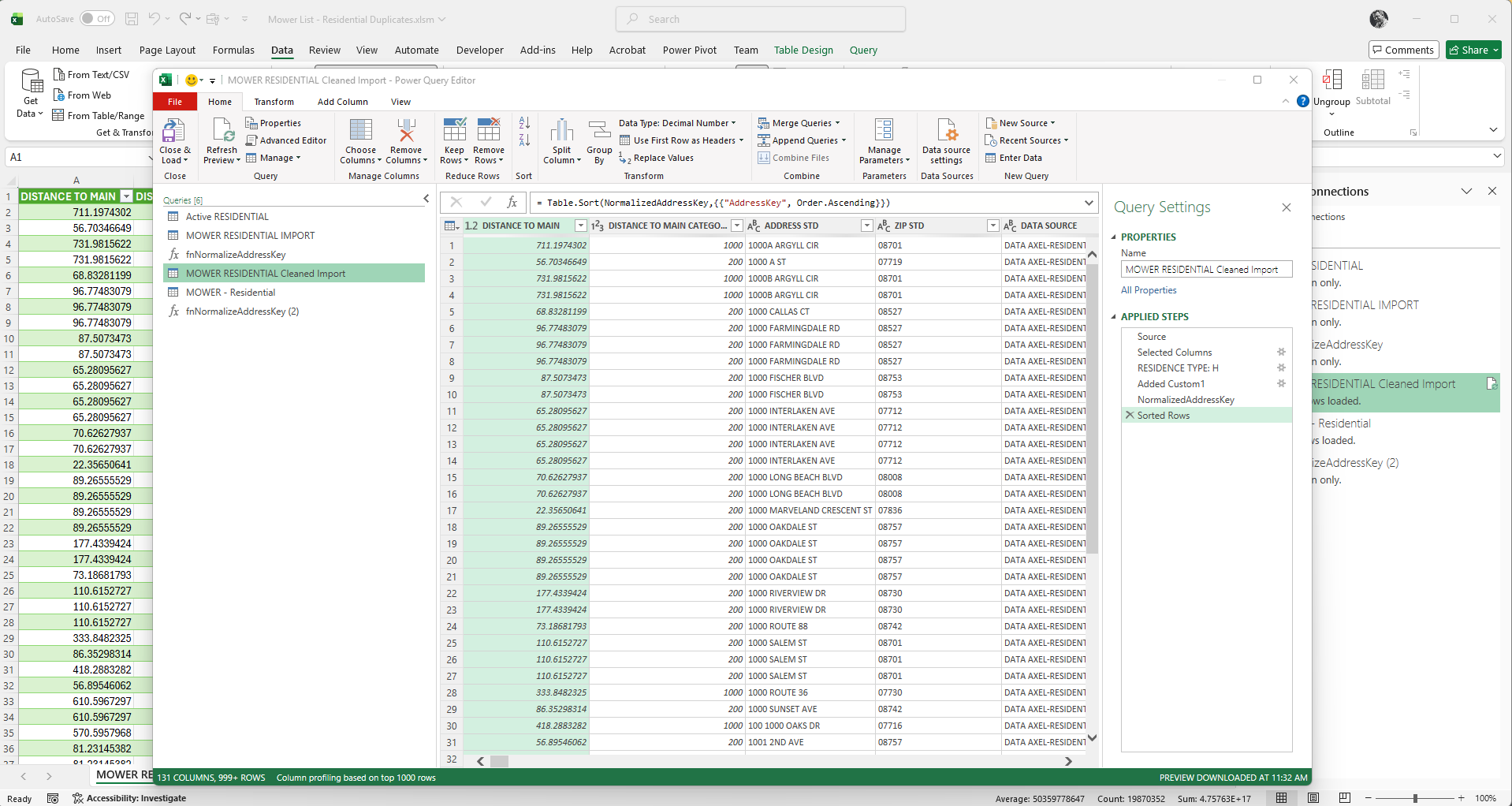
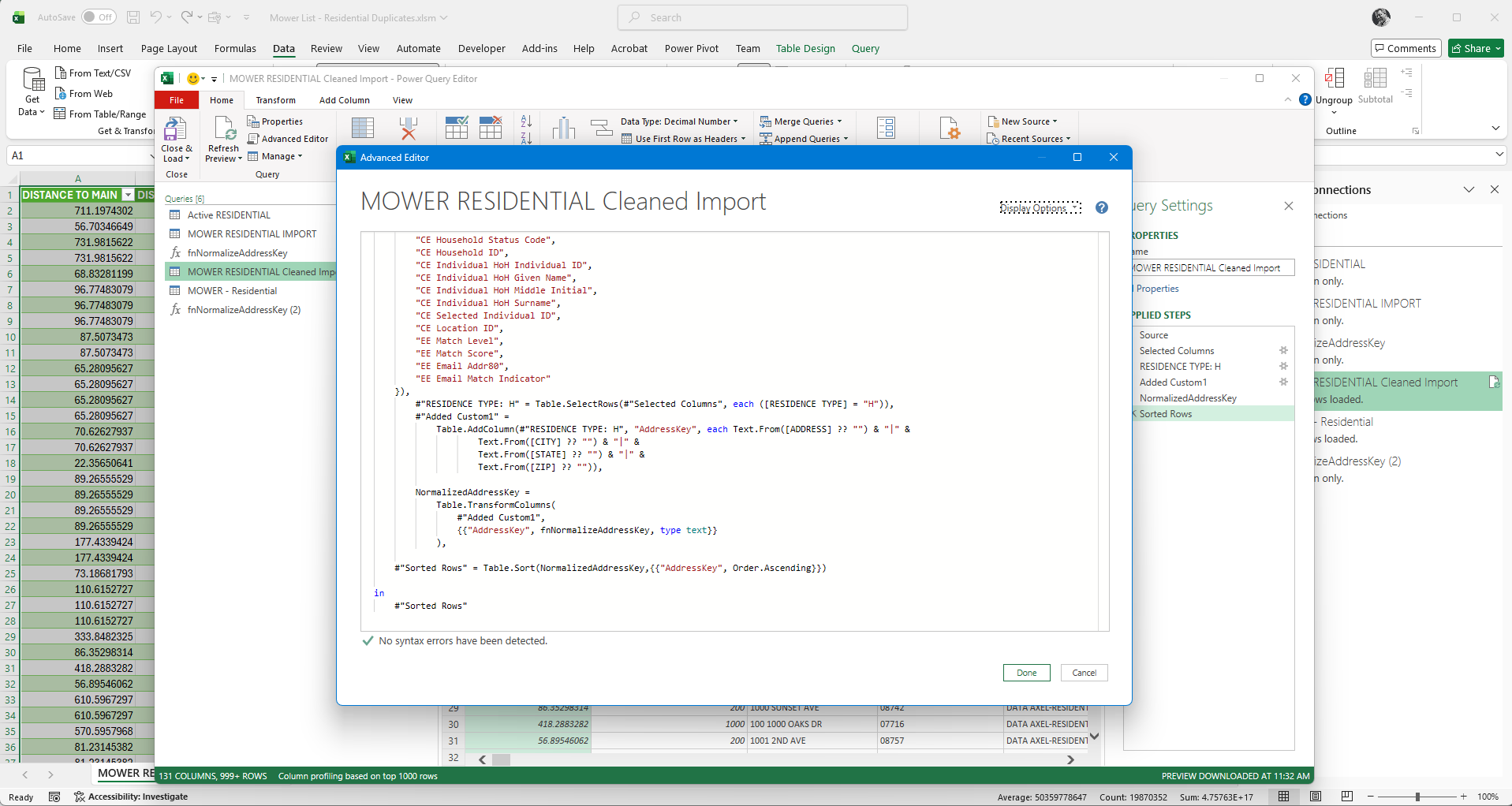
Marketing Clean Geo Leads: Quarterly, Power Query processes over 800,000 records to compare third-party prospect lists against existing residential and commercial customers. By utilizing a standardized address normalization function that strips punctuation, harmonizes directional indicators (e.g., North vs. N), and standardizes street types (e.g., Road vs. RD), the workflow eliminates duplicate overlap. This prevents NJR from wasting marketing budget on active clients while drastically reducing manual labor time.
Monthly Customer Churn & Construction Analysis: This monthly process identifies clients who have dropped service. The query cross-references dropped accounts against active construction permits; if construction is present, a two-year timer is established anticipating reconnection, whereas accounts without construction are automatically routed to the client retention team for targeted follow-up.
Pipeline Imbalance & Storage Reporting: To maintain critical system pressures and ensure accurate billing across shared gas pipelines, Power Query automates the ingestion, transformation, and loading of reports from every switching station four times daily, alongside hourly storage facility logs. This calculates real-time service levels and dispatches alerts immediately if operational imbalances occur.
Journal Entry Reconciliation Analytics: Within the accounting organization, Power Query pulls external banking records (such as PNC feeds) and reconciles them against internal general ledger accounts to verify financial alignment and flag discrepancies.